AI, Gaslighting, and the Fear of Being Left Behind
A designer’s response to Karen Hao’s critique of AI power, the pressure to keep up, and what it means to adopt creative tools on your own terms.
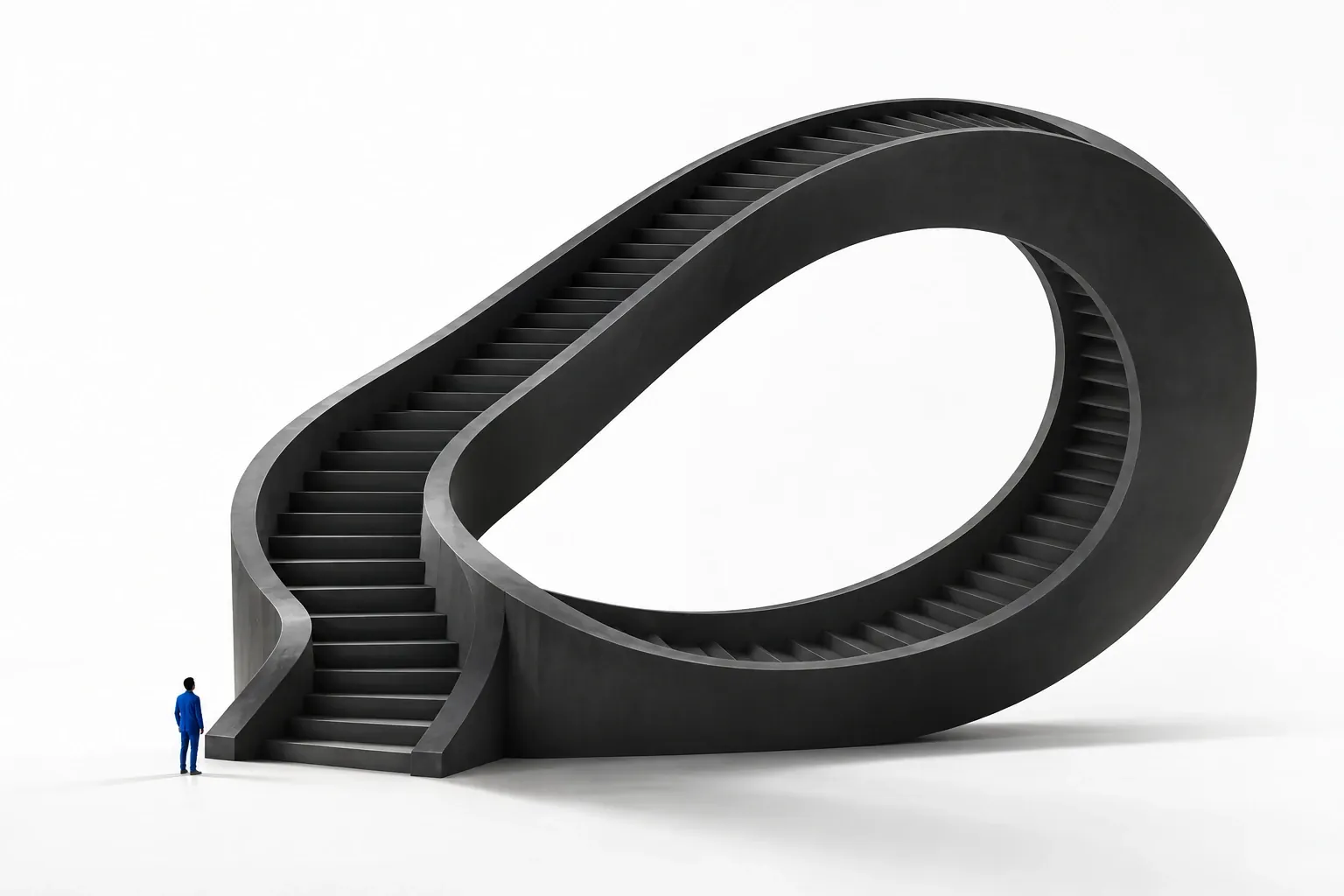
I use AI in my creative work. I explore it, test it, and combine it with design, editing, and visual effects. That makes the conversation around it personal. When a new tool arrives, I want to understand what it can help me make. I also want to notice when curiosity is being replaced by anxiety: the feeling that I have to adopt something immediately to remain valuable.
Karen Hao’s conversation with Steven Bartlett on The Diary Of A CEO raises a question that matters to anyone working in a creative field: who gets to define what progress means? This is my response to that conversation, from the perspective of a designer and visual artist. Watch the interview
What the gaslighting argument is actually about
Hao’s criticism concerns the companies and institutions around AI, rather than a chatbot giving an agreeable answer. She argues that industry influence over research and public understanding can make criticism seem uninformed. When Bartlett asks whether this amounts to gaslighting, she agrees with a qualification. She also argues that promises of extraordinary benefits and warnings of catastrophe can both be used to justify concentrating control over the technology. Read the interview transcript
That is her interpretation of the industry’s incentives. It is not proof that every researcher is dishonest or every forecast is a deliberate manipulation. The useful question is whether a claim gives us evidence we can examine, or asks us to trust the people making it because they say the stakes are too high to disagree.
When a product pitch becomes a test of your worth
In advertising, a message can sell more than a product. It can sell a version of the person you should become. Applied to creative technology, that message can make a software decision feel like a judgement on your ambition, relevance, or intelligence.
Imagine a designer evaluating a new image tool. There is a practical question: can it produce the kind of work this brief needs, with enough control to survive revisions? Then there is an emotional question: what if everyone else is already using it and I am falling behind? The second question can hurry the purchase before the first has been answered.
This is the pressure I want to resist. Fear may get me to open an account. It does not tell me whether the tool belongs in my process. A compelling demonstration deserves attention; it still needs to hold up when the product must stay accurate, the shot must match the next shot, and the client changes the brief.
Separate a prediction from a sales argument
In a separate EBU interview, Hao argues that journalists should scrutinise AI executives’ statements rather than simply treating them as scientific authority. I think that is a useful habit for buyers of creative tools, too: expertise deserves a hearing, while a commercial claim still needs checking. Karen Hao’s EBU interview
For me, that means translating a big promise into a small, testable question. Instead of trying to decide whether a platform represents the future of creativity, I can test whether it solves one real production problem. I can count the attempts, corrections, cost, and time required to reach a usable result. I can compare that with the method I already know.
That comparison can favour AI. Sometimes it should. But it can also favour a photograph, a 3D scene, a careful edit, or a simpler idea. The brief should have a vote in the decision.
The creative work still needs direction
Consider a ten-second product film. Generating an attractive shot is one part of the job. Deciding what the audience should notice, keeping the product consistent, choosing a rhythm, and knowing which image to remove are also part of it. Faster image production changes the process; it does not answer every creative question inside that process.
After more than a decade across design and moving images, those are the skills I want to keep developing alongside new tools. I want technology to expand what I can execute, while I remain responsible for the choices that make the work coherent.
A new capability is useful. My judgement still has a job.Fettah — El Florentino
Keep a say in the future you are helping build
Hao’s guidance for the Global Investigative Journalism Network challenges the idea that AI is inevitable, neutral, or disconnected from material costs. It directs attention to power, data, labour, and infrastructure. That wider frame matters: evaluating an industry involves more than testing the quality of its outputs. Hao’s GIJN masterclass
My practical starting point is modest: adopt with a purpose. Know what a tool adds, what it costs, and what you still need to control. Keep learning the craft that lets you judge the result. Leave room to question the business model even when you enjoy the product.
I want to participate in the development of creative technology with my eyes open. Curiosity is a good reason to experiment. A clear production need is a good reason to adopt. The fear that my experience has suddenly become worthless should not be the thing making the decision.